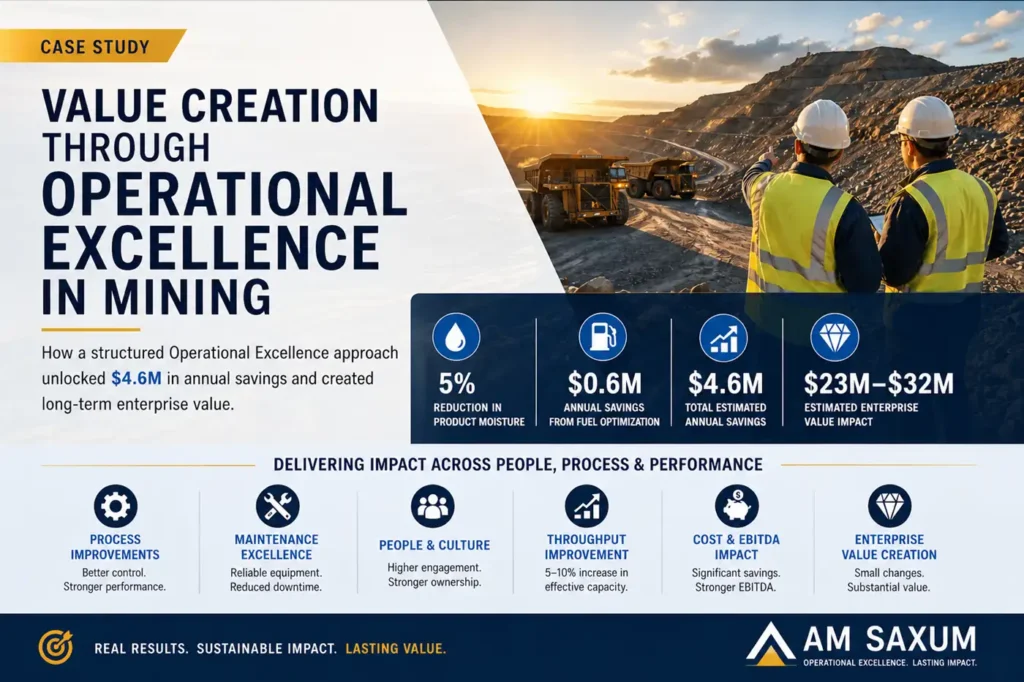
In mining operations, inefficiencies often remain embedded within accepted processes. In this case, excess moisture in bulk concentrate product was driving avoidable costs in both transportation and downstream drying—creating a significant yet under-addressed source of inefficiency.
n parallel, a second opportunity was identified in haul truck operations, where fuel consumption was elevated due to equipment configuration misalignment and a lack of controls over fuel quality and supplier-delivered volumes.
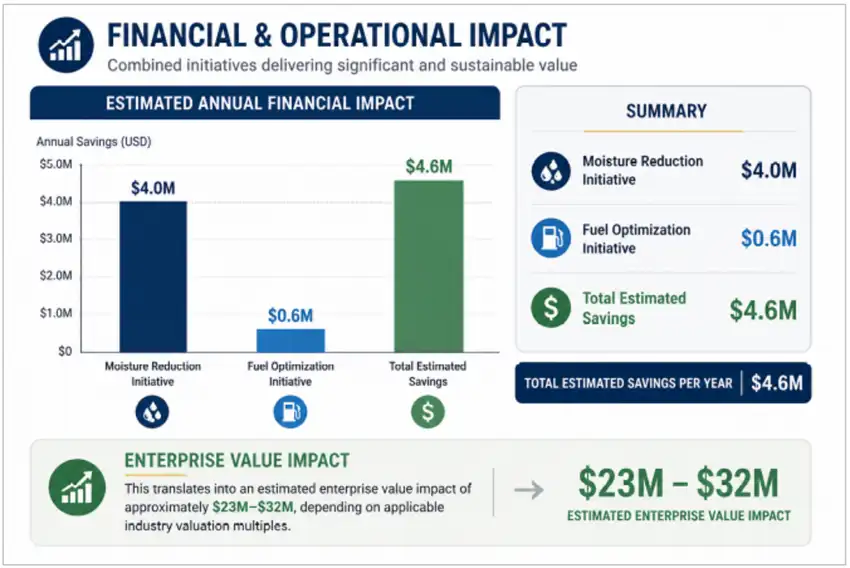
Through a structured Operational Excellence approach and strong leadership alignment, the operation addressed both issues within six months—unlocking approximately $4.0M in annual savings from process optimization and an additional $0.6M from fuel optimization, for a total estimated impact of $4.6M annually, without significant capital investment.
The Opportunity
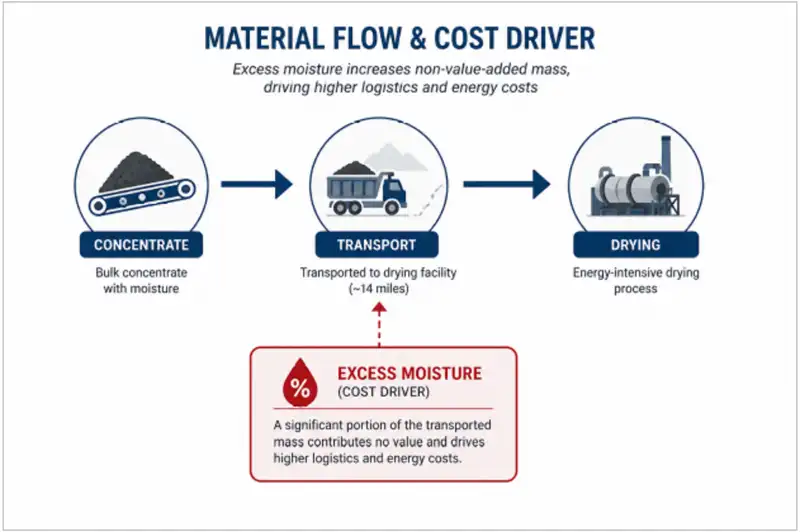
The operation processed bulk concentrate product that required transportation to a drying facility located approximately 14 miles away. However, moisture levels of approximately 16% meant that a significant portion of the transported mass contributed no value, while also increasing energy requirements in downstream drying.
This resulted in a structurally elevated cost base across both logistics and energy consumption.
The Real Challenge: Beyond the Process
Previous attempts to address the issue had failed, leading to skepticism within operations and maintenance teams. Maintenance functions were already under pressure, and alignment between leadership expectations and system capabilities was limited.
The core challenge was not purely technical—it was organizational, requiring engagement, trust-building, and coordinated execution.
Approach: Operational Excellence + Lean Leadership
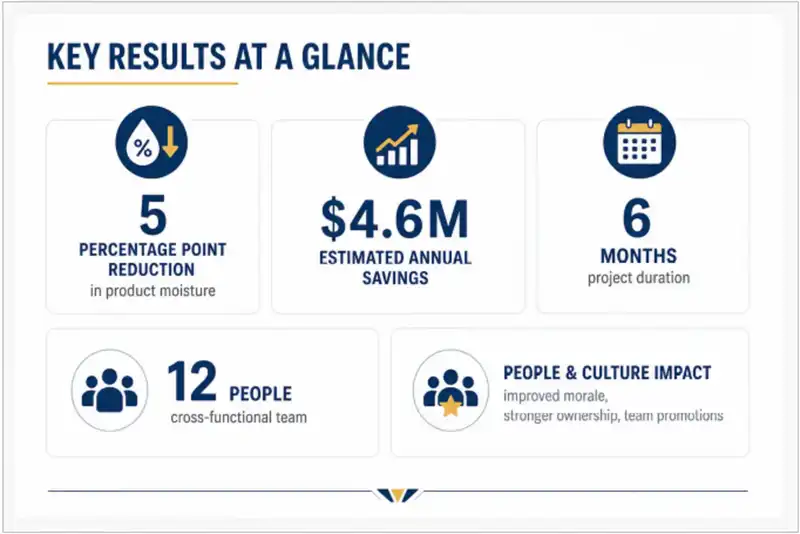
A structured Kaizen initiative was launched, involving a cross-functional team of approximately 12 members across production, maintenance, engineering, quality, safety, and management.
The approach included process mapping, root cause analysis, leadership engagement, and change management to ensure alignment and buy-in.
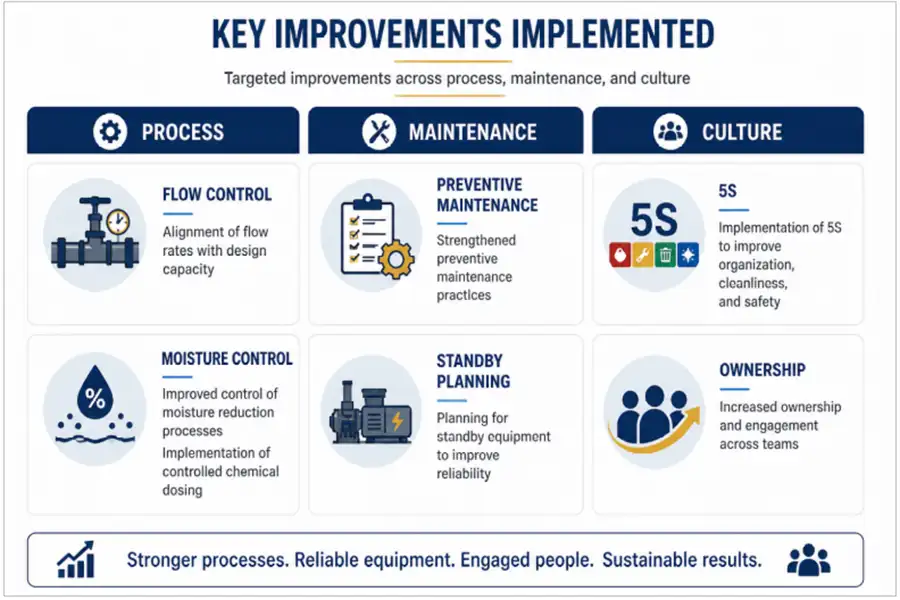
Key Improvements Implemented
Additional Initiative: Fuel Optimization
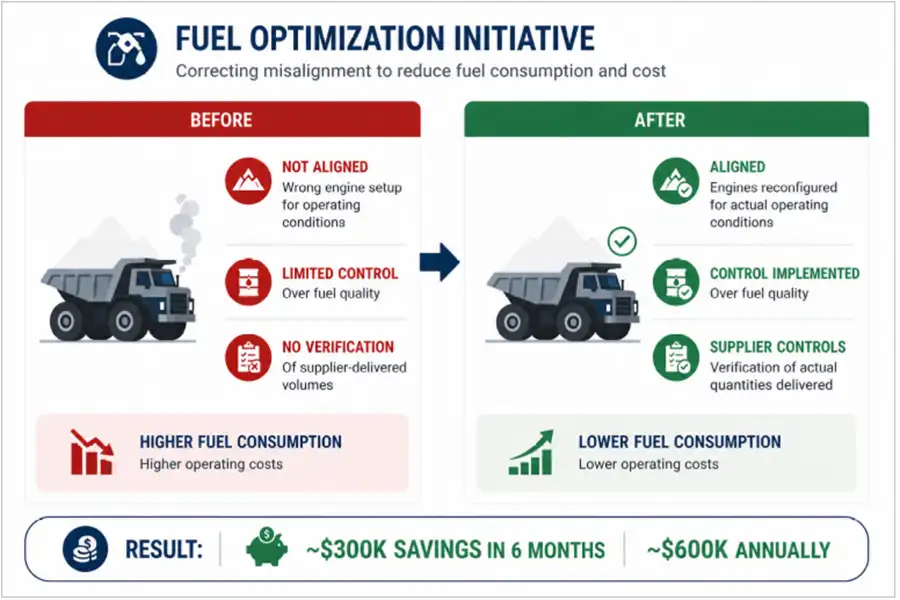
A complementary initiative addressed excessive fuel consumption in haul trucks transporting material within the operation.
Root cause analysis identified that engine configurations were not aligned with operating conditions. In addition, there was limited control over fuel quality, and no verification of the actual quantities delivered by suppliers.
By reconfiguring engines and implementing supplier controls, the operation achieved approximately $300K in savings within 6 months, equivalent to $600K annually.
Financial & Operational Impact
The combined initiatives delivered significant operational and financial improvements across the value chain.
Estimated Annual Financial Impact
• Moisture reduction initiative: $4M annually
• Fuel optimization initiative: $0.6M annually
• Total estimated savings: $4.6M per year
Enterprise Value Impact
This translates into an estimated enterprise value impact of approximately $23M–$32M, depending on applicable industry valuation multiples.
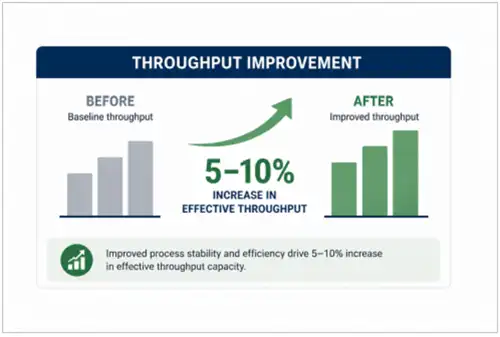
Additional benefits included improved process stability, an estimated 5–10% increase in effective throughput capacity, improvements in overall equipment effectiveness (OEE), enhanced operational efficiency, and stronger cost control discipline.
Leadership & Cultural Impact
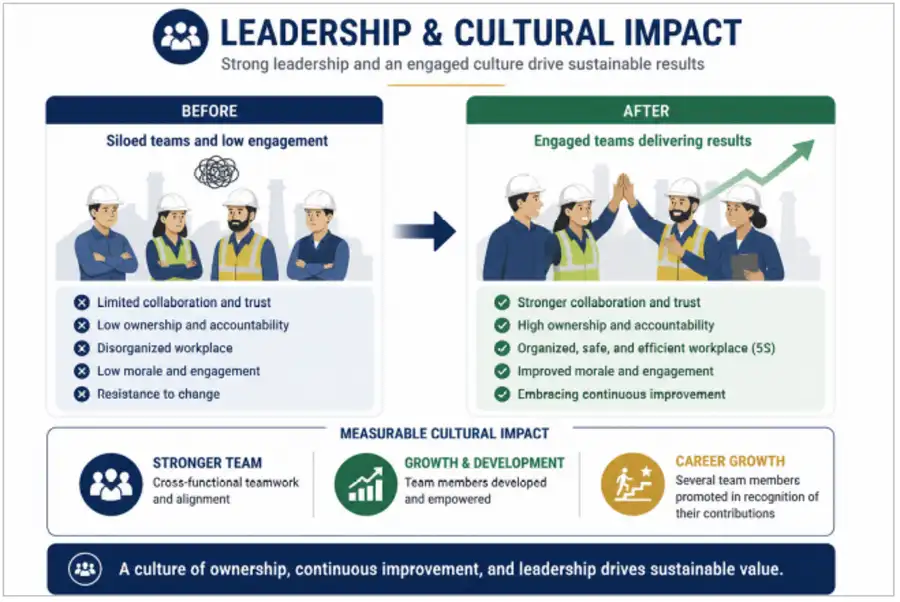
Overcoming resistance to change was a critical success factor. Through structured engagement and leadership alignment, the team rebuilt trust and secured buy-in across functions.
The implementation of 5S significantly improved working conditions, morale, and engagement. Several team members were subsequently promoted, reinforcing a culture of ownership and continuous improvement.
Key Takeaways for Mining and Private Equity Leaders
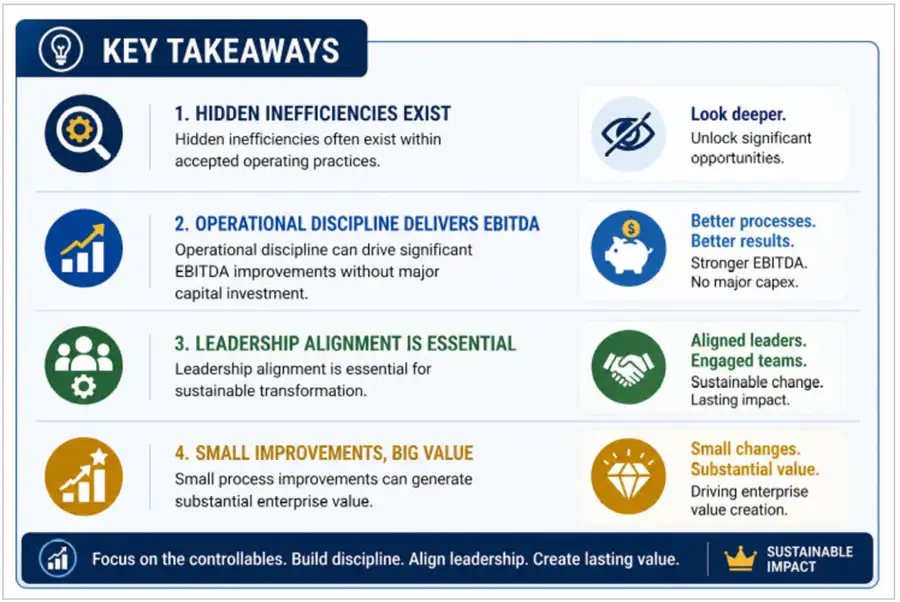
- Hidden inefficiencies often exist within accepted operating practices
- Operational discipline can drive significant EBITDA improvements without major capital investment
- Leadership alignment is essential for sustainable transformation
- Small process improvements can generate substantial enterprise value
Next Steps for Executive Consideration
For executives evaluating how to improve cost structure, operational performance, cash flow, and long-term competitiveness, a structured Operational Excellence strategy can be a powerful value creation lever.
To learn more about AM Saxum’s Operational Excellence, Lean Six Sigma, and Lean Leadership advisory services—or to discuss your organization’s specific priorities—contact AM Saxum at 1-888-772-2809 or visit: